A Beginner’s Guide to Brand Collabs: Partners, Stock & Sales, All In One Place
Brand collaborations offer independent brands a powerful way to borrow credibility and expand audience reach. This guide explains how to leverage collabs effectively, addressing common pain points like stock management and sales distribution.

If you’re new here, hi, welcome. We’re genuinely glad you found us.
This is Labeld: a platform built for brands who refuse to blend in. Today we’re talking about one of the oldest ways to stand out, which is, ironically, not doing it alone.
We get it. A collab sounds exciting right up until someone asks, “So who’s holding the stock?” Then it turns into a group chat with 400 messages, a spreadsheet nobody updates, and one awkward conversation about money. It doesn’t have to go like that. Let’s get into it, shall we?
WHY COLLABS WORK
Here’s what most founders get backwards: they think a collab is something you do once you’ve “made it”. Wrong order. A collab is one of the fastest ways to get there.
There’s a real effect behind this called the halo effect. When people already like one thing, they assume whatever stands next to it is good too. Put your name beside a brand someone already trusts and some of that trust spills onto you, before they’ve touched a single product. You’re borrowing credibility you’d otherwise spend months earning.
Then there’s social proof. We trust what other people have already said yes to. “Hints × Planks” tells a shopper, in four words, that two brands looked at each other’s work and vouched for it. That’s a review written into the name.
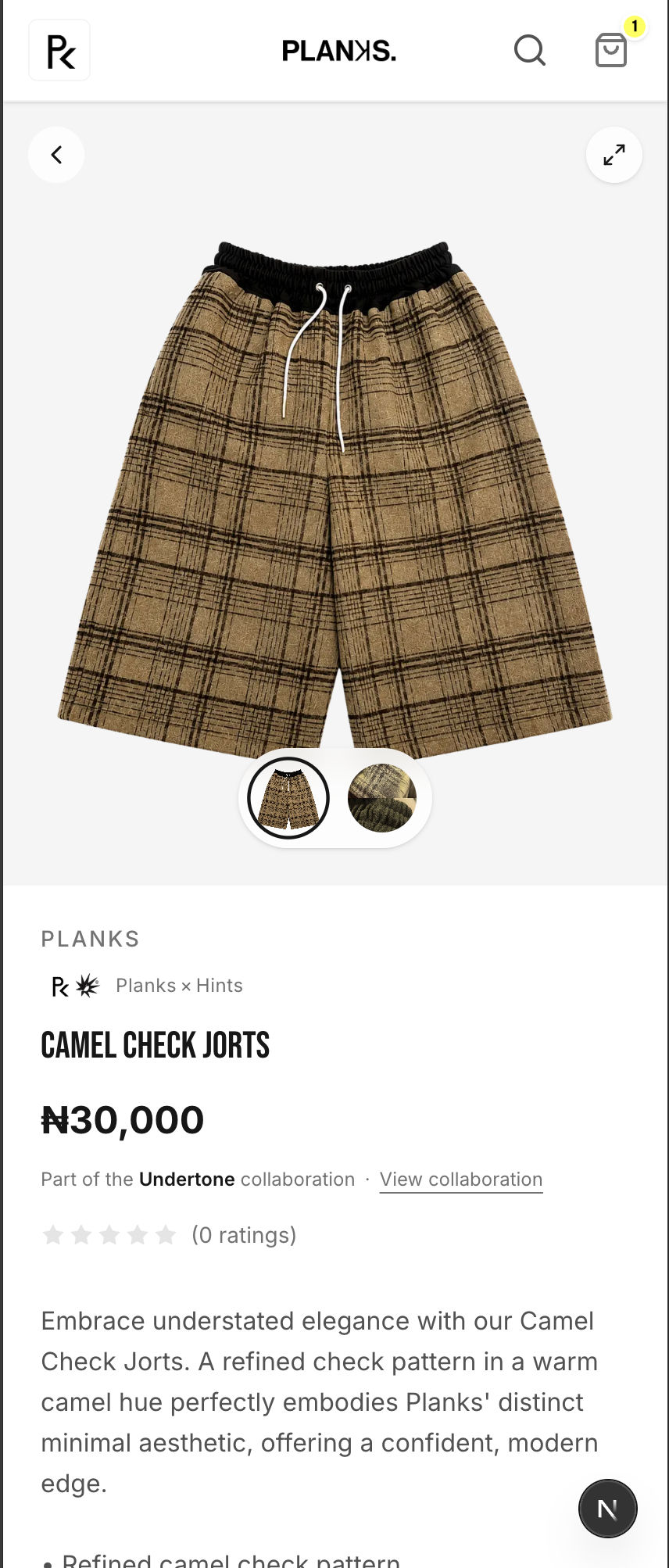
And the best part is the audience. Your followers meet them, their followers meet you. It’s like being introduced at a party instead of walking up to strangers by yourself.
THE PART NOBODY TALKS ABOUT
So why don’t more small brands do it? Because the creative part is fun and everything after it is stress.
Somebody has to count stock. Somebody has to collect the money and “send your share”. Somebody oversells the last hoodie because two people bought it at the same time on two different pages. By the end, the drop is done and the friendship is on probation.
This is the part we built Collabs for.
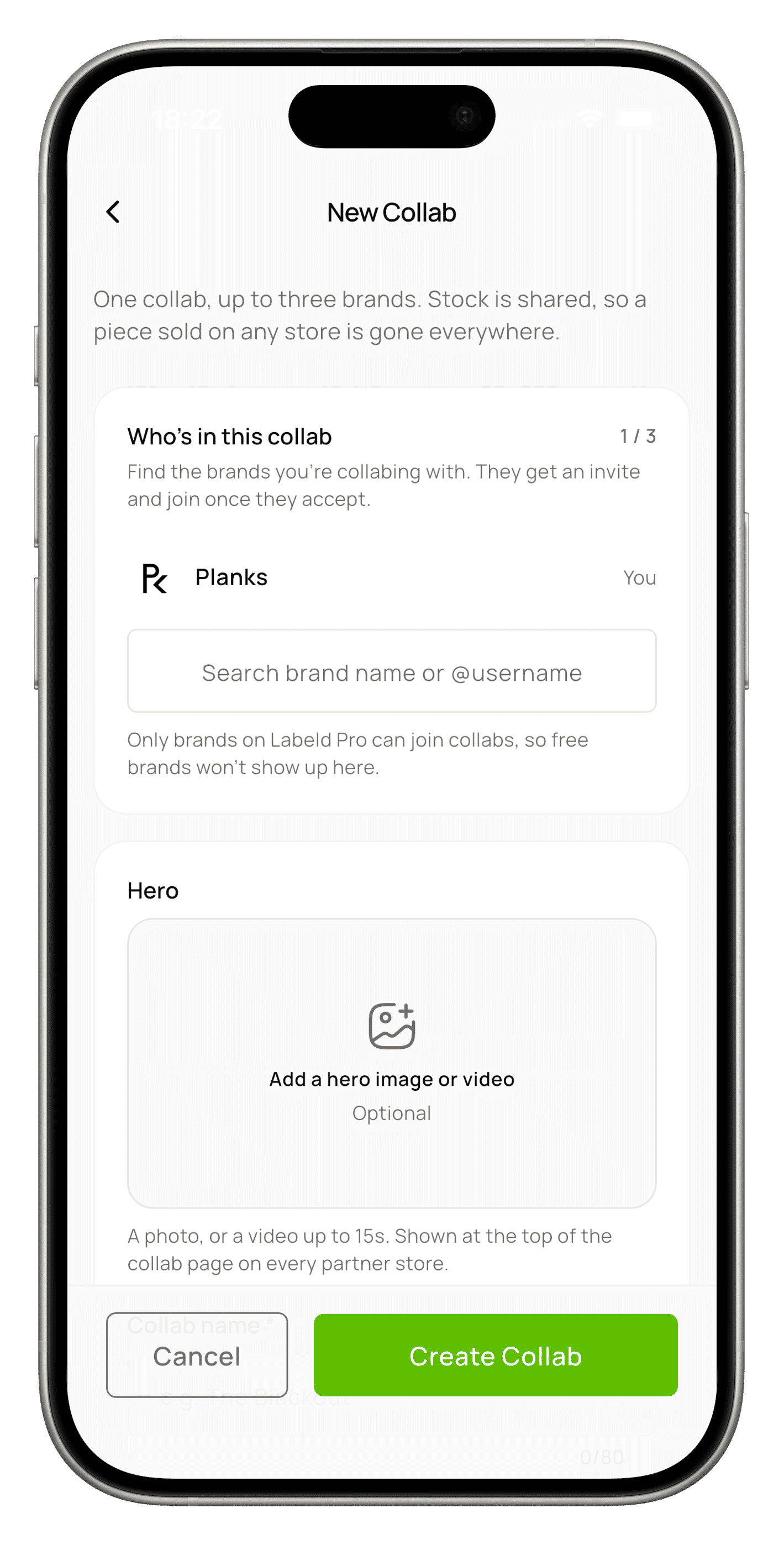
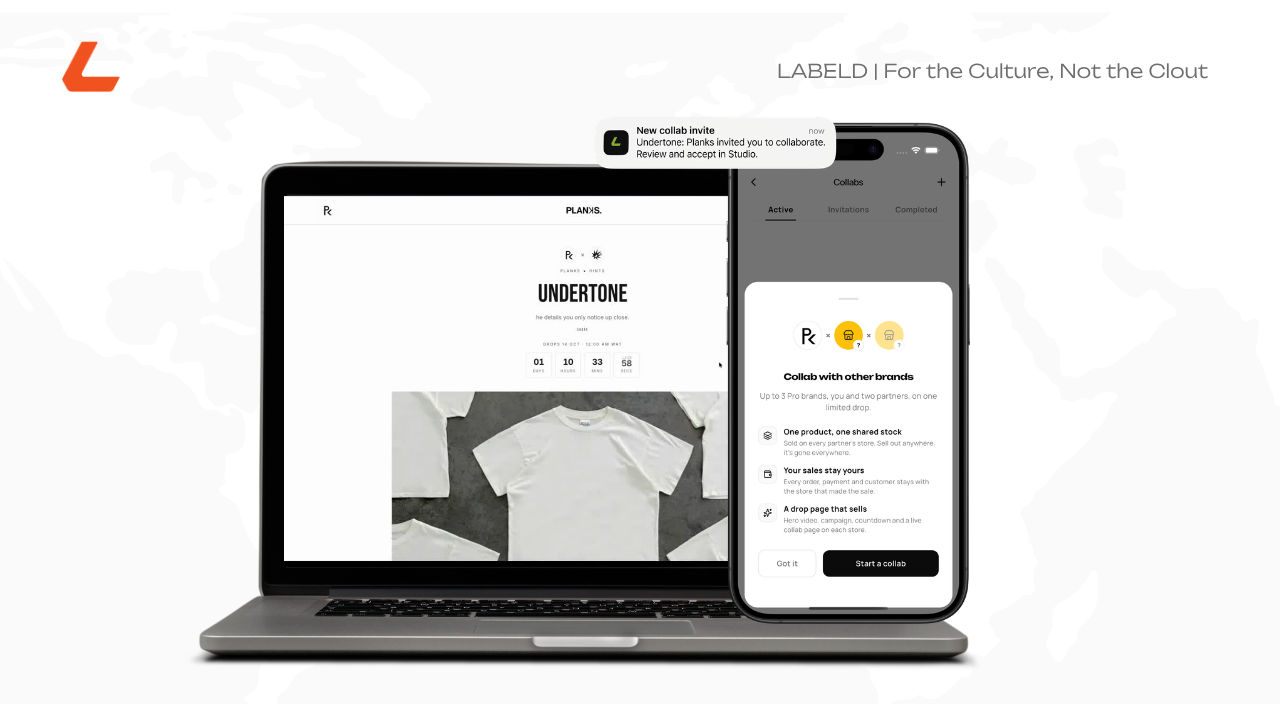
On Labeld, you start a collab in Studio, invite up to 2 other brands by their username, and each brand adds its own products. Those products show up on every partner’s store with a “Brand × Brand” badge. You do the creative work. The platform does the counting.
ONE STOCK, NO DRAMA
Shared stock is where most collabs fall apart, so let’s be clear about how it works here.
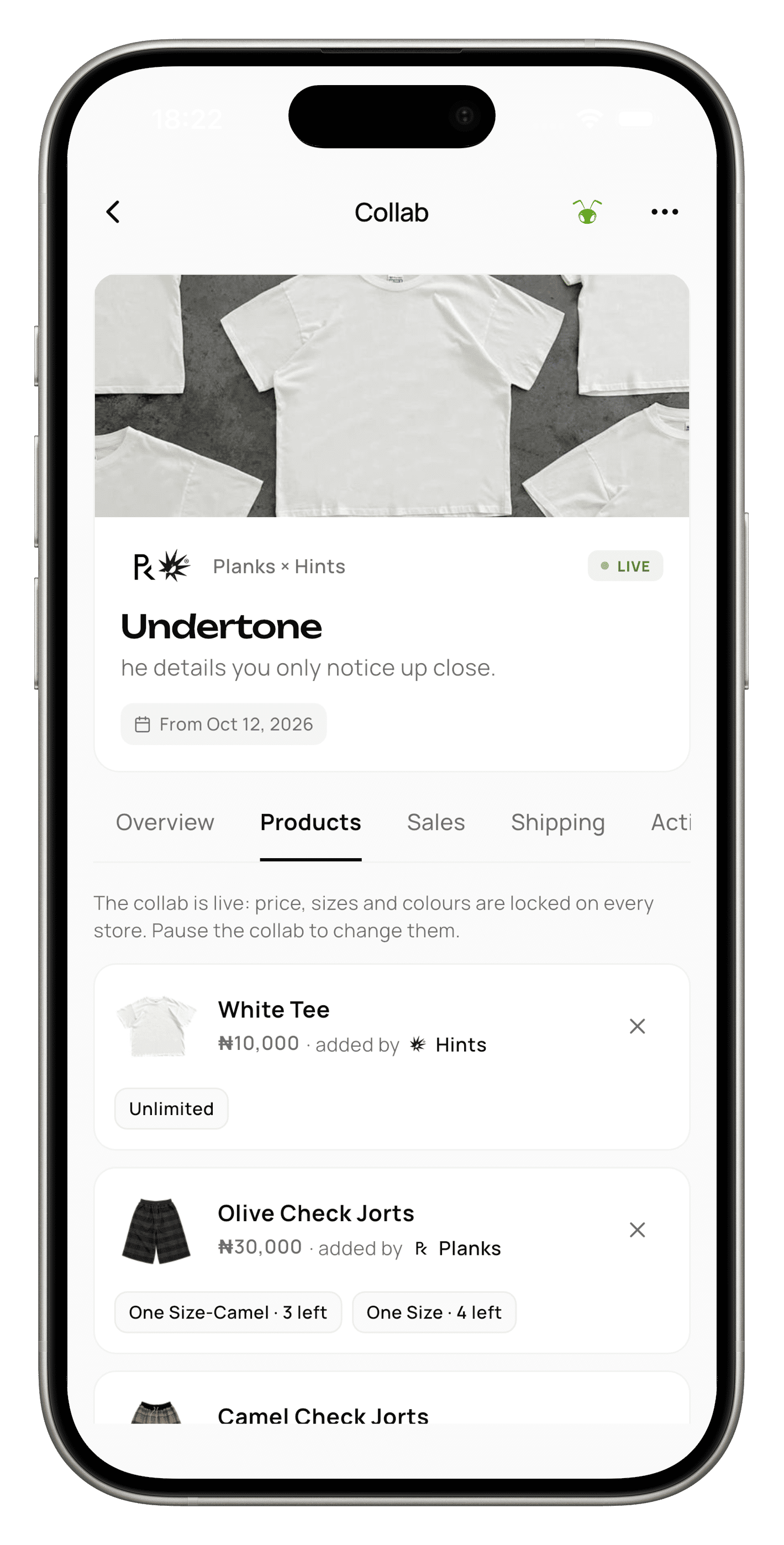
If there are 10 hoodies, there are 10. Not 10 on your store and 10 on theirs. When the last one sells, it’s sold out everywhere at once. While someone is paying, their item is held for them for a few minutes, so two customers on two stores can’t both buy the final piece. Nobody has to send the “so sorry, we actually ran out” message.
Partners can’t quietly change your product either. If they want a new price or a different description, they send a suggestion, and the brand that added the product approves it. Your product, your call.
YOUR SALE IS YOUR SALE
This is the one that ends the awkward conversations. If a customer buys on your store, the order is yours, the customer is yours, and the money goes into your wallet. No splitting, no “abeg send my side”.
Customers stay private too. Partners see counts, like “12 customers, 8 of them new to your store”, never names or emails. You get the reach of a team-up without handing over your customer list.
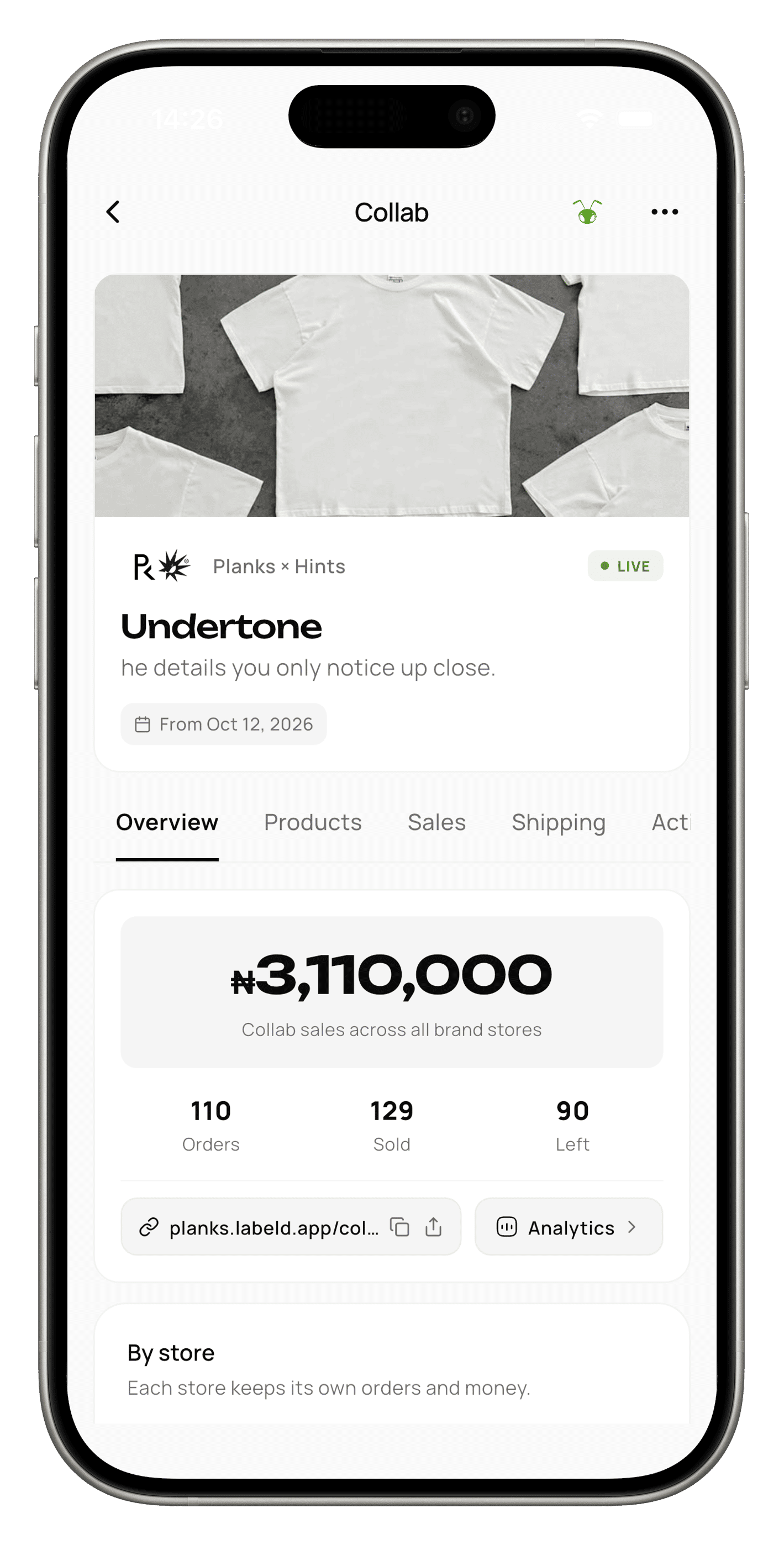
And if your partner is the one with the stock in their studio, you can ask them to ship your order for you. They accept, ship it and update the status, and the sale still belongs to you.
BUILD THE HYPE, THEN LET IT DROP
Timing matters more than people think, because of something called the scarcity effect: when something is limited, or about to disappear, people want it more and decide faster. “I’ll buy it later” doesn’t survive a countdown.
Every store gets its own collab page with your hero image or video, the story, campaign photos and the products. Before launch it shows a countdown and a Notify me button. Shoppers who tap it get one email the moment the drop opens, which is exactly when their interest is highest.
Here’s the difference in actual words. “Collab coming soon” gets scrolled past. “Undertone drops Friday 7pm. 40 pieces, shared across both stores” gets screenshotted.
Small tip: post your collab link, not just a picture. Each brand gets its own link, so you’ll actually see whose sharing brought people in.
KNOW WHAT’S WORKING
A drop without numbers is just vibes. Collab analytics show you visitors, which products people look at versus which ones they buy, where buyers came from (Instagram, WhatsApp, TikTok) and how each store is doing. If your jacket has hundreds of views and no sales, that’s not a mystery anymore, that’s a sign to check the price or the photos.
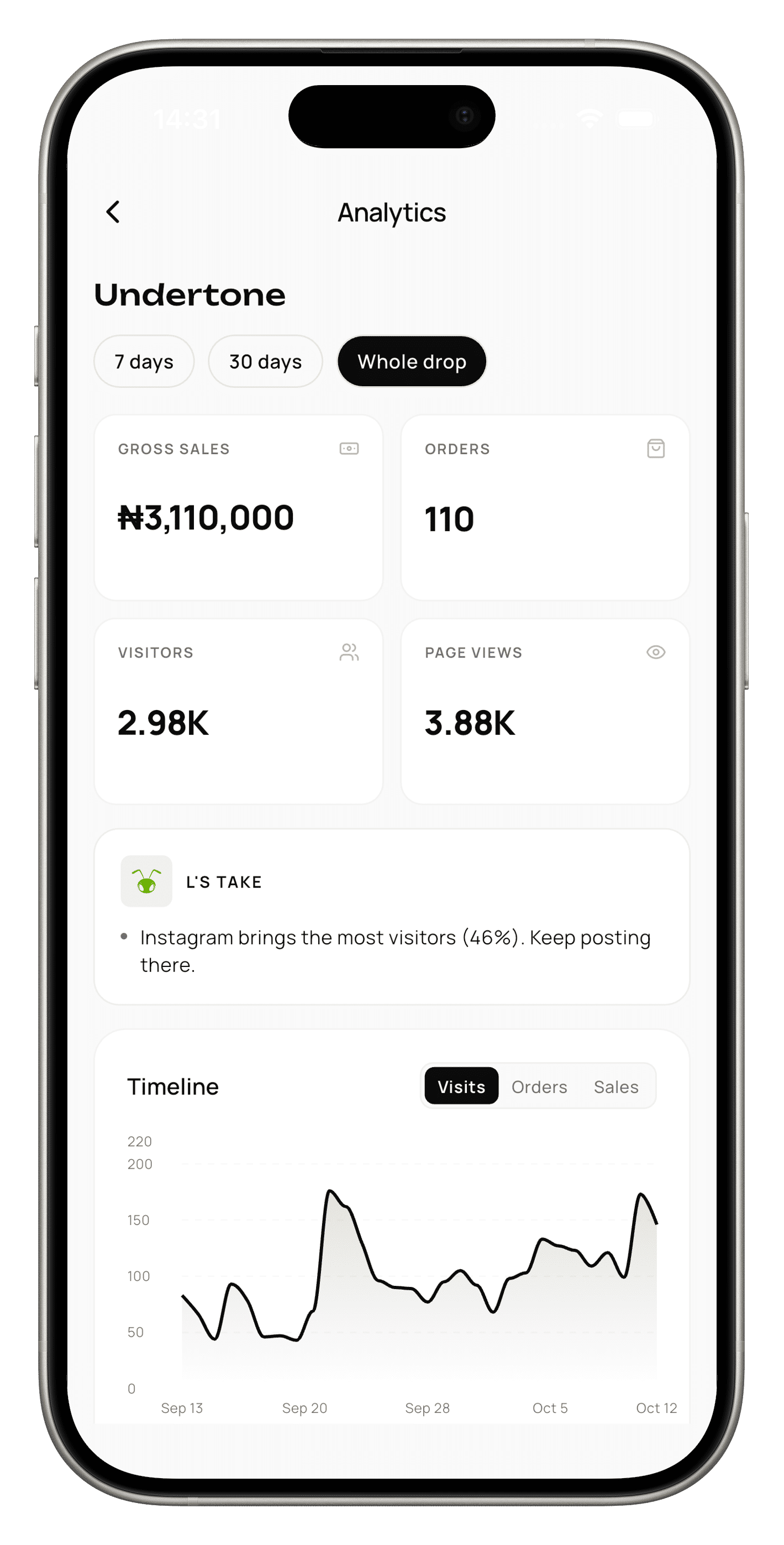
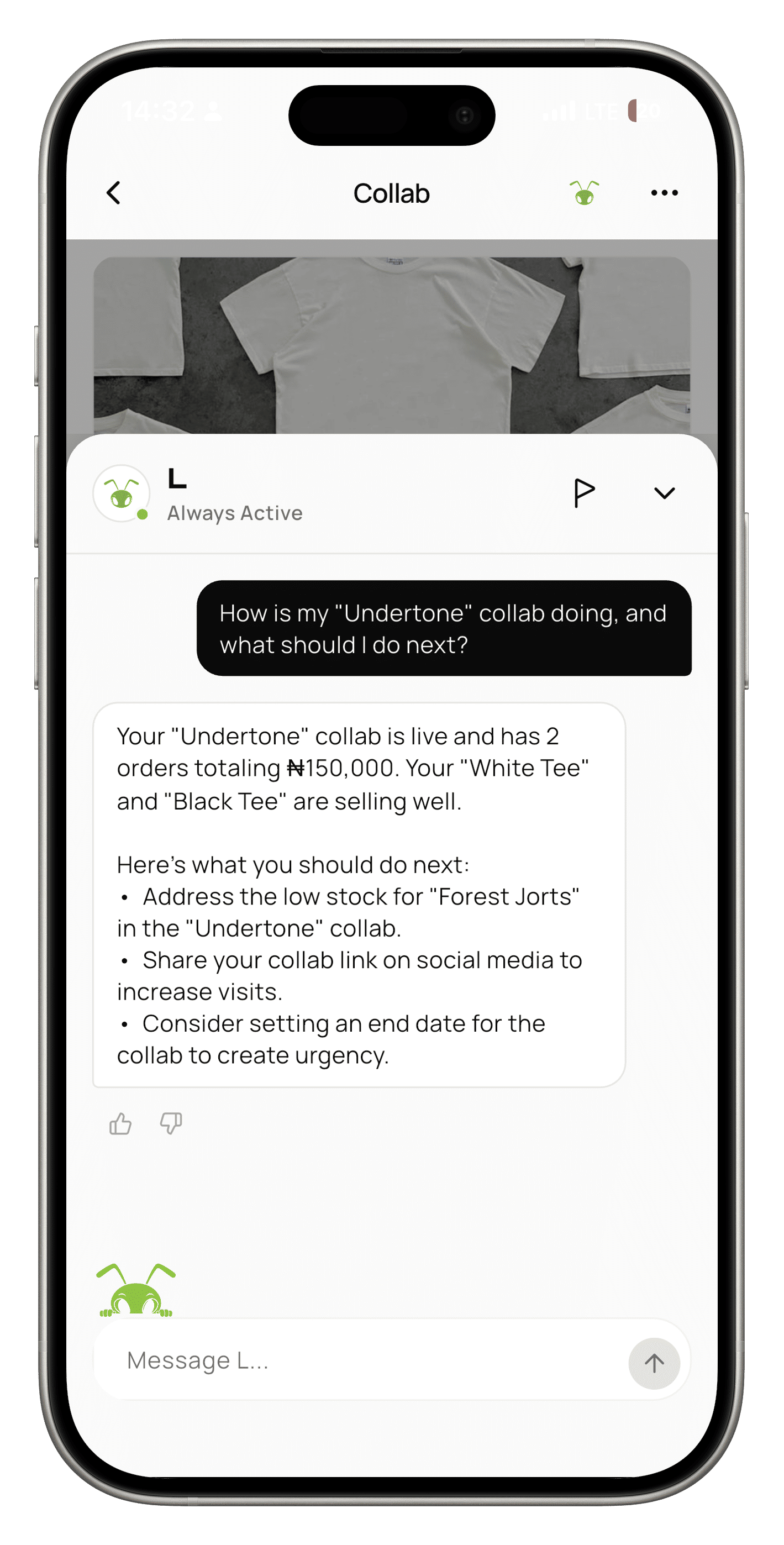
And if you’d rather just ask, L, the assistant inside Studio, can tell you how your collab is doing and what to do next. L will also nudge you when something needs you: a partner’s suggestion waiting, stock running low, a shipping request about to expire.
ONE LAST THING
We can’t make your partner post on time. We can’t pick the right brand for you, and we definitely can’t settle who designed the better half of the drop. That part is still a human job.
What we can do is take the counting, the splitting and the “who owes who” off the table, so the only thing you two have to agree on is how good the drop looks.
Collabs are available to Pro brands in Labeld Studio.
Your next drop is better together. Go send the invite.
The newsletter for
brand builders.
Guides, drops, and dispatches from Labeld — in your inbox, no noise.
Start your brand
for the culture.
Launch drops, manage events, and run your storefront from one place with Labeld Studio.
Get started